
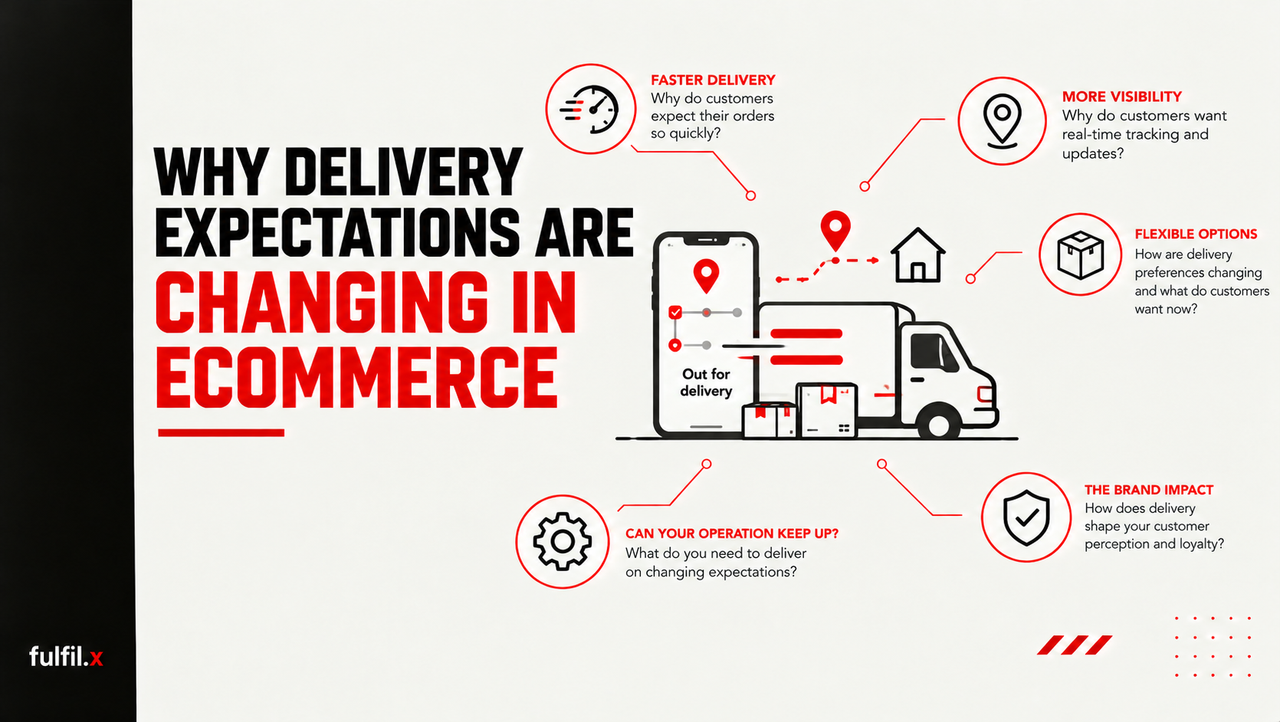
Not so long ago, customers were generally happy to wait several days for an online order to arrive. Today, expectations are very different.
With next-day delivery, real-time tracking and flexible delivery options becoming increasingly familiar, customers want more visibility and convenience than ever before.
For e-commerce brands, this creates a new challenge. It's no longer enough to offer a great product and a smooth checkout experience. Customers also expect their orders to arrive when promised, with clear communication at every stage.
So, what's driving these changing expectations, and what does it mean for e-commerce businesses?
The Demand for Faster Delivery
One of the biggest changes in e-commerce is the expectation of speed.
Customers have become accustomed to having products delivered quickly, particularly when shopping with larger online retailers. This has influenced what they expect from businesses of every size.
However, offering faster delivery isn't simply a case of choosing a quicker courier service. It depends on what happens before a parcel even leaves the warehouse.
Orders need to be processed efficiently, stock must be available and picking and packing operations need to run smoothly. If there are delays at any stage, even the fastest delivery service can't make up for lost time.
For growing brands, finding the right balance between delivery speed, operational capacity and cost is essential. Faster delivery can be valuable, but only when the operation behind it can consistently support the promise being made.
Customers Want More Visibility
Speed matters, but knowing where an order is matters too.
Customers increasingly expect to receive updates throughout the delivery process, from dispatch confirmation to tracking notifications and estimated arrival times.
Without this information, even a relatively short delivery can feel uncertain. Customers may start contacting support teams to ask where their parcels are, creating additional pressure for businesses.
Clear tracking information helps manage expectations and gives customers greater confidence in their purchase. It also allows them to plan around deliveries rather than being left wondering when something will arrive.
For e-commerce brands, this means considering the entire communication journey, not just the moment an order is dispatched.
Flexibility Is Becoming Part of the Experience
Customers don't all want their orders delivered in the same way.
Some prioritise speed, while others prefer to choose a convenient delivery day or have their parcel left in a safe place. Options such as collection points, nominated-day delivery and alternative delivery locations have become important considerations when shopping online.
Offering flexibility can help make the purchasing experience more convenient, particularly for customers who aren't always available to receive parcels.
However, these options also need to be supported by reliable fulfilment and courier processes. Delivery choices should be realistic, clearly communicated and properly integrated into the wider operation.
The aim is to give customers more control without creating unnecessary complexity behind the scenes.
Delivery Is an Extension of Your Brand
It's easy to think of delivery as the final stage of an order, but from the customer's perspective, it's part of the overall experience.
A customer might discover your brand through social media, spend time browsing your website and carefully choose a product. But if the parcel arrives late, damaged or poorly packaged, that positive experience can quickly change.
The delivery process can influence how customers perceive a business and whether they're likely to purchase again.
This is particularly important for growing e-commerce brands trying to build customer loyalty. Consistent delivery experiences help create trust, while poor experiences can lead to negative reviews, complaints and lost repeat business.
Your brand experience doesn't end at checkout. It continues right up until the customer receives their order.
Can Your Fulfilment Operation Keep Up?
As delivery expectations continue to evolve, e-commerce businesses need to make sure their fulfilment operations can support them.
This means looking beyond courier options and considering how efficiently orders are processed before dispatch. Accurate inventory, organised warehouse processes, reliable technology and effective courier coordination all contribute to a smoother delivery experience.
For businesses experiencing increasing order volumes, maintaining these standards can become more challenging. Processes that worked well at lower volumes may struggle as demand grows.
Working with a 3PL can give brands access to established fulfilment processes, warehouse infrastructure and courier services without having to manage every part of the operation themselves.
The right setup can help businesses meet customer expectations while keeping their operations efficient and scalable.
Meeting Expectations Without Compromising Efficiency
Customer expectations aren't likely to stand still. As delivery options develop and online shopping becomes increasingly convenient, brands will need to keep reviewing how they manage the post-purchase experience.
That doesn't necessarily mean offering the fastest or most expensive delivery option available. It means understanding what your customers value and making sure your operation can consistently deliver on its promises.
From accurate dispatch times and clear tracking to reliable courier coordination, every stage contributes to the experience.
Because in e-commerce, a great customer experience doesn't end when someone places an order. It ends when that order arrives.